
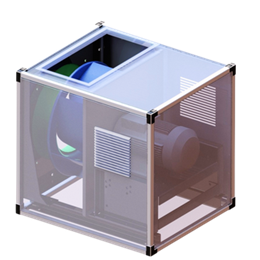
Industrial exhaust fans act as the lungs of your manufacturing facility or warehouse. They are responsible for extracting hazardous fumes, controlling ambient temperatures, and maintaining a safe, breathable environment for your workforce. However, because they constantly operate in harsh, dust-filled, or corrosive conditions, they experience significant wear and tear. Neglecting routine maintenance inevitably leads to reduced airflow, spiked energy consumption, and catastrophic equipment failure.
To keep your operations running smoothly and avoid costly downtime, follow this comprehensive, step-by-step maintenance guide.
1. Prioritize Safety with Strict Lockout/Tagout
Never cut corners on safety. Before beginning any physical inspection or maintenance work, completely disconnect the fan’s power supply. Implement a rigorous Lockout/Tagout (LOTO) procedure to guarantee that the equipment cannot be accidentally energized while your technicians are servicing it.
2. Deep Clean the Blades and Housing
In industrial environments, dirt, grease, and chemical residue accumulate rapidly on the fan’s impeller blades. This uneven buildup throws the entire fan assembly off balance, triggering severe vibrations that can quickly destroy internal components. Use appropriate industrial-grade degreasers to carefully clean the blades, the motor housing, and the protective louvers.
3. Inspect and Lubricate the Bearings
Bearings bear the brunt of rotational forces and are often the first components to fail if neglected. Listen closely for unusual grinding or squealing noises during normal operation. Always refer to the specific maintenance manuals provided by top industrial exhaust fans manufacturers to determine the exact type of grease required and the correct lubrication schedule. Remember that over-greasing can blow out seals and cause as much damage as running dry.
4. Calibrate Belts and Align Pulleys
If your exhaust fan is belt-driven, the drive system requires regular scrutiny. Inspect the belts for obvious signs of cracking, fraying, or hardening. Belt tension must be precisely calibrated; a loose belt slips and reduces exhaust efficiency, while an overly tight belt puts excessive strain on the motor bearings. Furthermore, ensure pulleys are perfectly aligned using a straightedge or laser tool to prevent uneven wear.
5. Evaluate the Motor and Electrical Components
A mechanical inspection is incomplete without checking the electrical health of your fan. Look for frayed wiring, loose terminal connections, or signs of scorching inside the control box. Measure the motor’s amperage draw while running and compare it against the baseline data on its nameplate. An unusually high current draw is a major red flag indicating mechanical friction or impending motor failure.
Secure Lasting Performance with Kohmer
While diligent maintenance drastically extends the life of your equipment, the foundation of reliable ventilation is the build quality of the fan itself. It is essential to source your equipment from trusted industrial exhaust fans manufacturers in India who engineer products specifically for rigorous, heavy-duty applications.
As a leading industrial fan manufacturer, Kohmer designs and builds robust exhaust solutions tailored to withstand the most demanding operational environments. Our precision-engineered fans not only deliver exceptional aerodynamic performance but are also designed with maintenance accessibility in mind, making your routine checks safer and faster.
Do not let poor ventilation compromise your facility’s safety or productivity. Contact Kohmer today to discuss your industrial exhaust requirements and invest in equipment built for total reliability.