
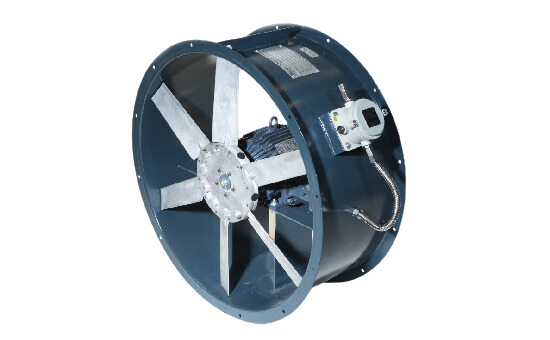
Axial fans are the lungs of many industrial facilities, responsible for moving vast volumes of air for ventilation, cooling, and exhaust. Known for their efficiency in low-pressure applications, they are generally reliable machines. However, like any mechanical equipment subjected to continuous rotation and airflow stress, they can develop issues. Ignoring these signs can lead to catastrophic failure, costly downtime, and safety hazards.
Here are the most common problems operators face with axial fans and how to troubleshoot them.
1.Excessive Vibration
Vibration is the number one enemy of rotating machinery. If your fan starts shaking, it is an immediate red flag.
- The Cause: The most common culprit is impeller imbalance. This can happen if dirt or dust builds up unevenly on the blades, or if a blade has been chipped by debris. Other causes include loose mounting bolts, misalignment between the motor and the shaft, or a bent shaft.
- Troubleshooting: First, lock out the power and clean the blades thoroughly. Inspect them for physical damage. Check all mounting fasteners and tighten them. If the vibration persists, you may need a dynamic balancing test. Top industrial axial fans manufacturers always precision-balance their fans before shipping, but wear and tear can undo this over time.
2.Unusual Noise
A fan should hum, not rattle, screech, or grind.
- The Cause: A grinding noise usually points to bearing failure. A high-pitched screech could indicate a loose belt (in belt-driven units) or blades rubbing against the housing. A low-frequency throbbing sound might indicate aerodynamic stall, meaning the fan is fighting against too much pressure.
- Troubleshooting: Lubricate the bearings; if the noise continues, they likely need replacement. Check the clearance between the blade tip and the housing. If the fan is “surging” or throbbing, check for blockages in the ductwork or closed dampers that are restricting airflow.
3.Insufficient Airflow
The motor is running, but the air just isn’t moving as it should.
- The Cause: This is often an external issue rather than a fan fault. Clogged inlet filters, blocked ducts, or a change in the system layout can increase resistance beyond what the axial fan can handle. However, it can also be due to incorrect rotation direction (wiring issues) or incorrect blade pitch settings on adjustable models.
- Troubleshooting: Check the rotation direction immediately; a fan running backward moves significantly less air. Clean all filters and screens. If you need replacement parts or a more powerful unit, ensure you consult a reputable axial fans supplier who can match the performance curve to your system’s resistance.
Reliable Airflow Starts With Kohmer
Troubleshooting is vital, but the best way to prevent issues is to start with high-quality equipment. Kohmer is a premier name in the industrial ventilation sector. We understand that an axial fan is only as good as its engineering.
At Kohmer, we design fans that minimize common failure points. Our impellers are dynamically balanced for smooth operation, our housings are reinforced to prevent distortion, and we use premium bearings designed for long operational lives. Whether you need a standard ventilation fan or a custom heavy-duty exhaust solution, our team ensures that your air movement system is efficient, quiet, and reliable.
Don’t let fan failure disrupt your operations.
Are you facing persistent fan issues or looking to upgrade your ventilation system? Contact Kohmer today for expert advice and durable industrial fan solutions.