
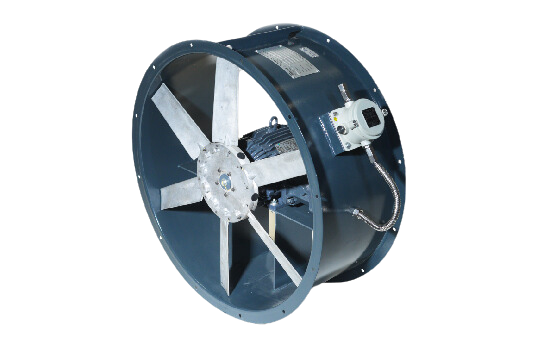
In industrial settings—from massive manufacturing plants and bustling data centres to large-scale commercial HVAC systems—ventilation is not just about comfort; it is a critical operational requirement. However, continuous industrial ventilation requires a staggering amount of electricity. With global energy costs rising and environmental regulations tightening, facility managers are under immense pressure to cut power consumption without compromising performance.
The solution often lies in upgrading a surprisingly common component: the industrial axial fan.
Here is exactly how modern, energy-efficient axial fans drastically reduce your facility’s power consumption and operational footprint.
1. Advanced Aerodynamic Blade Design
The fundamental purpose of an axial fan is to move high volumes of air parallel to the axis of the blade rotation. Older, traditional fan blades are often stamped from flat metal, which creates significant air resistance (drag) as they spin. This drag forces the motor to work harder, pulling more electricity from the grid just to maintain basic airflow.
Modern energy-efficient fans utilize advanced, air foil-shaped blades—often inspired by aircraft wings. This aerodynamic profile allows the blades to slice through the air with minimal turbulence and drag. By optimizing the pitch and curvature of the blades, the fan can move a significantly larger volume of air per rotation while demanding less torque from the motor.
2. High-Efficiency Motor Integration (EC Motors)
The true heart of power savings lies in the motor driving the blades. Traditional AC (Alternating Current) motors are notoriously inefficient, often losing a substantial percentage of their power to heat and mechanical friction.
Today’s leading energy-efficient fans are frequently paired with Electronically Commutated (EC) motors. EC motors combine the best features of AC and DC technology, operating at efficiencies of up to 90%. They run significantly cooler than standard AC motors and utilize intelligent onboard electronics to adjust their speed dynamically. Instead of running at 100% capacity all day, an EC motor only draws the exact amount of power required to meet the immediate airflow demand, resulting in dramatic energy savings during off-peak hours.
3. Lightweight, Durable Materials
The weight of the fan assembly directly impacts the electrical load on the motor. Heavy, cast-iron blades require a massive initial surge of electricity just to overcome inertia and start spinning. Leading axial fan manufacturers in India have shifted toward utilizing advanced, lightweight materials such as fiberglass-reinforced plastics, carbon fiber composites, and high-grade aluminium alloys.
These modern materials are incredibly strong and resistant to industrial corrosion, but weigh a fraction of their older metal counterparts. This lighter rotational mass allows the motor to spin up faster and maintain optimal speed using significantly less continuous electrical power.
Partner with Kohmer for Sustainable Ventilation
Upgrading to high-efficiency ventilation is one of the fastest ways to lower your facility’s overhead costs and improve its environmental footprint. However, achieving maximum efficiency requires sourcing equipment engineered precisely for your specific operational demands.
As a premier axial fan’s supplier and industrial fan manufacturer, Kohmer specializes in designing and fabricating state-of-the-art ventilation solutions. We utilize advanced aerodynamics, lightweight composites, and high-efficiency motor integration to deliver industrial fans that maximize airflow while radically minimizing power consumption.
Stop letting outdated ventilation drain your operational budget. Contact Kohmer today to discuss your facility’s requirements and upgrade to the next generation of energy-efficient industrial fans!