
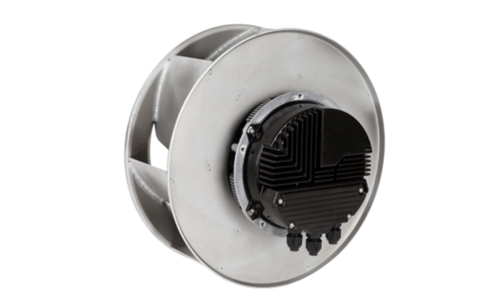
For decades, industrial maintenance teams relied on a simple but deeply flawed strategy for heavy-duty ventilation: calendar-based check-ups or, worse, running equipment to failure. But when a massive centrifugal fan goes down, the entire production line stops with it. Today, the integration of Smart Sensors and the Internet of Things (IoT) has completely flipped this paradigm. By connecting mechanical airflow systems to the digital cloud, plants are shifting from reactive panic to predictive precision.
Here is exactly how IoT integration is revolutionizing fan monitoring and extending equipment lifespans.
1. Precision Vibration Analysis
Historically, operators waited for an audible rattle or physical shaking to diagnose an issue. By that time, severe mechanical damage was usually already done. Modern IoT setups utilize triaxial accelerometers mounted directly on the fan casing and motor bearings.
These sensors continuously measure microscopic shifts in vibration frequencies. Advanced edge-computing algorithms can instantly distinguish between a slight dust build-up on the impeller blades and a critical bearing misalignment. This gives facility managers a precise warning weeks before a catastrophic physical failure occurs.
2. Real-Time Thermal Tracking
Heat is the ultimate enemy of heavy-duty electric motors. While traditional centrifugal fan suppliers provided baseline thermal ratings, real-world operational stress varies wildly based on ambient conditions and load.
IoT-enabled Resistance Temperature Detectors (RTDs) now monitor the exact temperature of the stator windings and bearing housings in real-time. If a localized hotspot develops—perhaps due to poor lubrication or restricted airflow—the system automatically flags a maintenance ticket. This immediate intervention prevents the motor’s internal insulation from degrading, saving thousands of dollars in rewinding costs.
3. Cloud-Based Predictive Maintenance
The true power of IoT isn’t just in gathering data; it is in connecting and analysing it. Smart sensors feed live telemetry to centralized, cloud-based dashboards. Machine learning algorithms analyse this continuous stream of data against historical performance baselines.
Instead of guessing when a drive belt might snap or a bearing might seize, operators receive automated, data-backed timeline predictions for component lifespans. Partnering with a forward-thinking industrial centrifugal fan manufacturer that supports these digital protocols means your ventilation systems actively tell you exactly when they need servicing, drastically reducing unplanned downtime.
4. Energy Optimization
Beyond preventing breakdowns, IoT monitoring directly reduces overhead. By tracking real-time airflow resistance and motor power draw, smart systems can automatically adjust Variable Frequency Drives (VFDs). The fan only draws the exact amount of electricity required for the current system load, often cutting energy consumption by 15% to 20% compared to traditional constant-speed operation.
The Future of Industrial Ventilation
Upgrading to smart monitoring is no longer a luxury; it is a baseline requirement for minimizing downtime, protecting heavy machinery, and maximizing operational efficiency.
As a premier industrial fan supplier, Kohmer engineer’s high-performance ventilation solutions designed to integrate seamlessly with advanced IoT diagnostic platforms. We deliver robust, reliable fans that keep your air moving and your data flowing, ensuring your facility operates at peak capacity.
Stop waiting for your critical equipment to fail. Contact Kohmer today to upgrade your facility with intelligent, high-efficiency centrifugal fans designed for the future of industrial monitoring.