
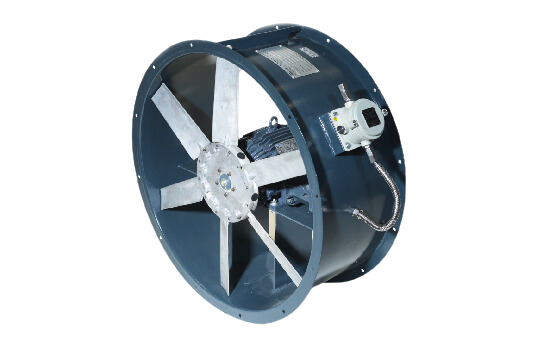
Industrial exhaust fans play an important role in maintaining proper ventilation, controlling heat, removing unwanted fumes, and improving air quality across industrial facilities. However, selecting the right fan requires careful consideration of the working environment, airflow requirements, and operating conditions.
1. Understand Your Ventilation Requirements
The first step is to determine why the exhaust fan is needed. Different applications may require ventilation for removing heat, moisture, dust, fumes, smoke, or contaminated air. Understanding the purpose of the ventilation system helps determine the appropriate fan type and capacity.
Consider the size of the area, number of air changes required, and the type of contaminants that need to be removed before selecting a suitable model.
2. Check Airflow and Pressure Requirements
Airflow capacity is one of the most important specifications when choosing an industrial exhaust fan. It is generally measured in cubic metres per hour (m³/hr) or cubic feet per minute (CFM).
The fan should provide sufficient airflow for the application without being unnecessarily oversized. Static pressure should also be considered, particularly when the exhaust system includes ducts, filters, louvers, or other components that restrict airflow.
3. Consider the Operating Environment
Industrial environments can expose equipment to high temperatures, humidity, dust, chemicals, and corrosive substances. The fan’s construction materials and design should therefore be suitable for the conditions in which it will operate.
For example, applications involving corrosive fumes may require specially selected materials or protective coatings, while high-temperature environments may require components designed to withstand elevated operating temperatures.
4. Evaluate Energy Efficiency
Since industrial exhaust fans may operate for extended periods, energy consumption can significantly influence operating costs. Look for fans designed for efficient airflow delivery and select a motor that matches the required operating conditions.
A properly sized and efficiently operating fan can help reduce unnecessary energy consumption while maintaining effective ventilation.
5. Compare Manufacturers and Support
When evaluating industrial exhaust fans manufacturers, consider their manufacturing capabilities, technical expertise, product quality, customization options, and after-sales support. A manufacturer with experience across different industrial applications can provide more suitable recommendations based on your facility’s requirements.
Businesses should also consider the availability of spare parts, maintenance assistance, installation guidance, and technical support.
6. Choose an Experienced Supplier
Selecting experienced industrial exhaust fans manufacturers in india can make the procurement process easier, particularly when the project requires customized specifications or large-scale ventilation solutions. Review product specifications, previous applications, quality practices, and customer support before making a decision.
Kohmer can be considered when evaluating industrial ventilation solutions based on application requirements, performance specifications, and operating conditions.
Conclusion
Choosing the right industrial exhaust fan involves more than comparing prices. Airflow, pressure, operating environment, energy efficiency, construction quality, customization, and technical support should all be evaluated. A systematic approach can help ensure reliable ventilation and long-term equipment performance.
Looking for the right industrial exhaust fan for your facility? Contact Kohmer today to discuss your ventilation requirements and find a suitable solution for your application.
FAQs
1. What factors should I consider when selecting an industrial exhaust fan?
Consider airflow capacity, static pressure, operating environment, fan construction, motor efficiency, installation requirements, maintenance needs, and manufacturer support before selecting an industrial exhaust fan.
2. How do I determine the required exhaust fan capacity?
Calculate the required air changes based on room volume and application requirements. Consider heat, fumes, contaminants, duct resistance, and other factors affecting required airflow and ventilation performance.
3. Are industrial exhaust fans suitable for high-temperature environments?
Yes, certain industrial exhaust fans are specifically designed for elevated temperatures. Select models with appropriate materials, motors, bearings, and construction based on the application’s temperature requirements.
4. Why is static pressure important for exhaust fan selection?
Static pressure represents resistance within the ventilation system. Selecting a fan capable of overcoming ductwork, filters, louvers, and other resistance ensures the required airflow reaches the intended area.
5. How can energy consumption be reduced with exhaust fans?
Choose correctly sized, efficient fans and motors, maintain components regularly, keep airflow paths unobstructed, and use suitable speed-control systems where applicable to reduce unnecessary energy consumption.