
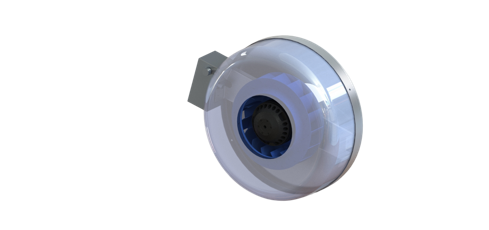
Choosing the correct inline duct fan size is essential for maintaining effective airflow, ventilation, and indoor air quality. A fan that is too small may not provide sufficient air movement, while an oversized unit can consume unnecessary energy and create excessive noise. Understanding a few key factors can help you select a fan that matches your space and ventilation requirements.
Calculate the Required Airflow
The first step is determining the airflow your space requires. Airflow is generally measured in cubic feet per minute (CFM) or cubic metres per hour (m³/h). Calculate the room’s volume by multiplying its length, width, and height. Then, consider how many air changes per hour (ACH) are appropriate for the application.
For example, workshops, commercial areas, and industrial spaces may require higher air-change rates than residential rooms. The required airflow can be estimated by multiplying room volume by the desired ACH and dividing by 60 when using CFM.
Consider Duct Size and Layout
Fan selection should also account for the existing ductwork. The fan diameter should correspond with the duct size to maintain efficient airflow. Smaller or restricted ducts can increase resistance and reduce performance.
Duct length, bends, filters, grilles, dampers, and other components also contribute to static pressure. A fan should therefore be selected based on both airflow and the pressure required to move air through the complete system.
Check Static Pressure Requirements
Static pressure is an important consideration that is sometimes overlooked. A fan may have a high maximum airflow rating, but its actual performance can decrease when resistance within the ventilation system increases.
Review the fan’s performance curve to determine whether it can deliver the required airflow at the system’s operating pressure. Consulting an experienced inline duct fan manufacturer can help ensure that the selected unit is suitable for the intended application.
Match the Fan to the Application
Different environments have different ventilation requirements. Residential spaces may prioritize quiet operation, while workshops, commercial buildings, and industrial facilities may require higher airflow capacity and durable construction.
Industrial fan manufacturers typically provide models designed for demanding environments, but factors such as operating temperature, humidity, dust levels, and continuous-duty requirements should still be evaluated before selecting equipment.
Consider Noise and Energy Efficiency
Noise levels can influence fan selection, particularly in offices, homes, studios, and other occupied spaces. Look for a model that provides the required airflow without producing unnecessary sound.
Energy efficiency is another consideration. Selecting a fan that matches the actual ventilation requirement can help avoid excessive power consumption. Kohmer can also be considered when evaluating ventilation equipment and solutions for different applications.
Final Selection
Before purchasing an inline duct fan, confirm the required airflow, duct diameter, static pressure, operating environment, noise level, and energy requirements. Comparing these factors helps ensure reliable ventilation and efficient system performance.
For application-specific guidance and suitable ventilation solutions, contact Kohmer to discuss your airflow and ducting requirements.
FAQs
1. How do I calculate the required inline duct fan size?
Measure the room volume, determine the required air changes per hour, and calculate airflow. Then account for duct resistance, bends, filters, and static pressure before selecting the fan.
2. Does duct length affect inline fan performance?
Yes. Longer ducts create greater resistance and can reduce airflow. Multiple bends, filters, dampers, and grilles also increase pressure losses, making appropriate fan selection important.
3. Can I use a larger inline duct fan?
A larger fan is not always better. Oversizing can increase energy consumption and noise while providing more airflow than necessary, so selection should match actual ventilation requirements.
4. What is static pressure in a duct system?
Static pressure represents resistance against airflow within the ventilation system. Higher resistance from ducts and components requires a fan capable of maintaining the desired airflow.
5. Should inline duct fans be selected based only on CFM?
No. CFM is important, but duct diameter, static pressure, system resistance, operating conditions, noise, and energy efficiency should also be considered for proper fan selection.