
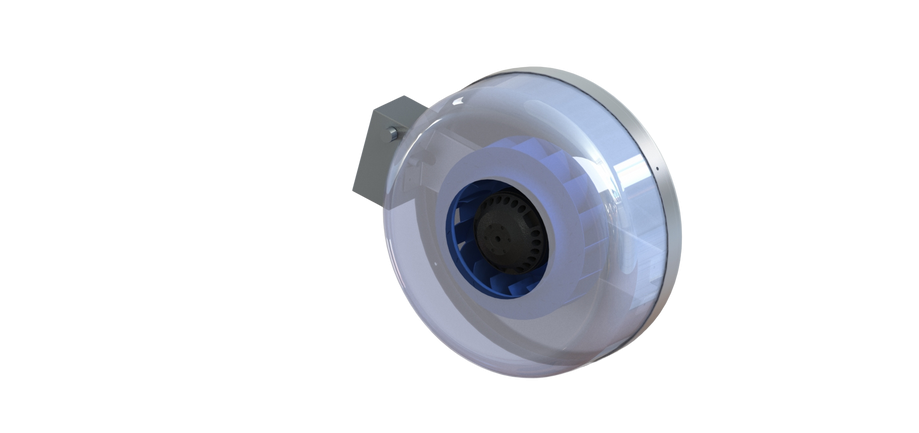
Proper ventilation is essential for maintaining clean air, controlling humidity, and ensuring a comfortable indoor environment. Whether used in commercial buildings, factories, offices, or residential spaces, ventilation systems rely on efficient airflow to remove stale air and introduce fresh air. One of the most effective components in these systems is the inline duct fan.
An inline duct fan is a compact ventilation device installed directly within a duct system. Unlike wall-mounted or ceiling-mounted fans, it is positioned inside the ductwork, allowing air to move efficiently through long ventilation channels. These fans are commonly used in HVAC systems, grow rooms, warehouses, kitchens, bathrooms, and industrial facilities where consistent airflow is required.
How Does an Inline Duct Fan Work?
An inline duct fan operates by using an electric motor to rotate fan blades or an impeller. As the blades spin, they create air pressure that pulls air into one end of the duct and pushes it out through the other. This continuous movement improves ventilation, removes excess heat, moisture, smoke, and airborne contaminants, while maintaining proper air circulation.
Depending on the application, inline duct fans can either supply fresh air into a space or extract stale air from it. Their enclosed design helps reduce noise levels while delivering high airflow efficiency, making them ideal for environments where quiet operation is important.
Benefits of Using an Inline Duct Fan
Installing an inline duct fan offers several advantages:
- Improves indoor air quality by enhancing ventilation.
- Reduces humidity and prevents mold growth.
- Supports energy-efficient HVAC performance.
- Operates with lower noise compared to conventional fans.
- Suitable for both residential and industrial applications.
- Easy to integrate into existing duct systems.
These benefits make inline duct fans a preferred solution for spaces that require reliable and continuous airflow.
Choosing the Right Inline Duct Fan
When selecting an inline duct fan, consider factors such as airflow capacity (CFM), duct size, static pressure requirements, motor efficiency, and installation environment. Choosing the correct specifications ensures optimal performance and long-term reliability.
Working with an experienced inline duct fan manufacturer is equally important. A trusted manufacturer provides high-quality products, technical expertise, and durable solutions designed to meet different ventilation needs.
Why Choose Kohmer?
Kohmer is dedicated to delivering premium ventilation solutions engineered for performance, durability, and energy efficiency. With advanced manufacturing processes and a commitment to quality, Kohmer offers inline duct fans suitable for a wide range of commercial and industrial applications. As one of the trusted industrial fan manufacturers, Kohmer focuses on innovative designs that deliver consistent airflow and long-lasting performance.
Conclusion
An inline duct fan is an efficient solution for improving airflow, maintaining healthy indoor air quality, and supporting effective ventilation across various environments. Its compact design, quiet operation, and reliable performance make it an excellent investment for both residential and industrial applications. If you’re looking for dependable ventilation solutions backed by quality engineering, explore Kohmer’s range of inline duct fans to find the right fit for your requirements.
FAQs
- What is the main purpose of an inline duct fan?
An inline duct fan improves airflow inside duct systems by moving fresh air into spaces or extracting stale air, helping maintain proper ventilation, temperature control, and indoor air quality efficiently.
- Where are inline duct fans commonly used?
Inline duct fans are commonly installed in homes, offices, factories, warehouses, commercial kitchens, bathrooms, grow rooms, and HVAC systems where efficient air circulation and ventilation are essential for performance.
- Are inline duct fans energy-efficient?
Yes, modern inline duct fans are designed with energy-efficient motors that deliver high airflow while consuming less electricity, making them a cost-effective solution for long-term ventilation requirements.
- How do I choose the right inline duct fan?
Select an inline duct fan based on airflow capacity, duct diameter, static pressure, motor power, installation location, and ventilation requirements to ensure efficient and reliable system performance.
- How often should an inline duct fan be maintained?
Regular maintenance every six to twelve months is recommended. Cleaning the fan, inspecting the motor, and checking duct connections help maintain efficiency, extend lifespan, and prevent unexpected failures.