
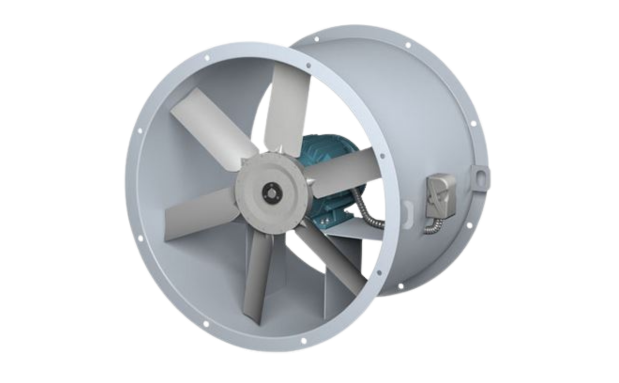
When designing a Heating, Ventilation, and Air Conditioning (HVAC) system, selecting the right air movement equipment is crucial for both performance and energy efficiency. Among the various types of industrial and commercial fans available, axial fans stand out as one of the most popular and widely implemented solutions across the globe. But what exactly makes them the go-to choice for engineers and facility managers?
Let’s explore the core reasons why axial fans are considered an indispensable component of modern HVAC engineering.
1. High-Volume Airflow Capabilities
The primary function of an axial fan is to draw air in and propel it out in the same direction, parallel to the rotating shaft. This specific aerodynamic design makes them exceptionally efficient at moving massive volumes of air. In HVAC applications where the primary goal is general ventilation, rapid space cooling, or exhausting stale air from a large facility, this high-volume capability is exactly what is required. They provide rapid, consistent air exchange rates, keeping large indoor environments fresh and safely temperature-regulated.
2. Space-Saving and Compact Design
Unlike centrifugal blowers, which require bulky, snail-shaped housings and force the air to turn 90 degrees, axial fans feature a highly streamlined, linear design. This allows them to be installed directly inline within existing ductwork, mounted flush against factory walls, or suspended from ceilings without occupying valuable operational floor space. For commercial buildings and tight industrial plants where, spatial footprint is at a premium, their compact nature offers unmatched installation flexibility.
3. Exceptional Energy Efficiency
Axial fans are designed to operate optimally in low-pressure environments. When the system resistance (static pressure) is relatively low, these fans can move incredible amounts of air while drawing significantly less horsepower than other fan variations. This lower power consumption directly translates to reduced monthly utility bills and a smaller overall carbon footprint. However, achieving this maximum efficiency requires precision sizing, which is why partnering with an experienced axial fans supplier is essential to ensure the equipment perfectly matches your system’s exact airflow dynamics.
4. Cost-Effective and Easy to Maintain
Because they utilize a simpler mechanical design with fewer moving components than centrifugal alternatives, axial fans are generally more cost-effective to manufacture, purchase, and install. Furthermore, routine maintenance is highly straightforward—usually involving basic blade cleaning, visual inspections, and bearing lubrication. This results in much lower long-term operational costs and drastically minimized system downtime.
Partnering with Kohmer for HVAC Excellence
To fully harness these mechanical benefits, the quality of fabrication cannot be compromised. As a premier axial fan’s manufacturer, Kohmer specializes in engineering robust, high-performance exhaust and ventilation solutions tailored specifically for demanding HVAC environments. Kohmer utilizes premium-grade materials and advanced aerodynamic balancing to ensure their fans deliver maximum airflow with minimal acoustic noise and vibration. Whether you need heavy-duty exhaust fans for a warehouse or reliable ventilation for a commercial complex, Kohmer provides systems built for absolute longevity.
Upgrade Your HVAC Airflow Today!
Are you ready to improve your facility’s indoor air quality while reducing your daily energy consumption? Don’t settle for inefficient, off-the-shelf ventilation. Contact Kohmer today to consult with our technical experts and discover the perfect custom axial fan solution for your operational needs!
Frequently Asked Questions
What is the main advantage of using an axial fan in HVAC?
Axial fans efficiently move massive volumes of air at low pressures. Their compact, linear design allows for easy installation within ductwork, saving valuable floor space while minimizing energy consumption.
How do axial fans reduce factory energy consumption?
They operate with low aerodynamic resistance. When paired with Variable Frequency Drives (VFDs), their motor speed adjusts to real-time airflow demands, significantly cutting monthly electricity usage and operational costs.
Are axial fans suitable for high-pressure industrial systems?
No, axial fans excel in low-pressure, high-volume applications like general ventilation. For high-pressure environments pushing air through heavy filters, industrial centrifugal fans are the more effective choice.
Why are custom axial fans better than standard off-the-shelf models?
Custom manufacturers like Kohmer engineer fans to your exact airflow dynamics. This precise sizing maximizes energy efficiency, minimizes acoustic noise, and extends equipment lifespan in HVAC environments.
How often do HVAC axial fans require routine maintenance?
Due to fewer moving parts, they require minimal maintenance. Visual inspections, blade cleaning, and routine bearing lubrication every six months ensure optimal performance and prevent unexpected downtime.