
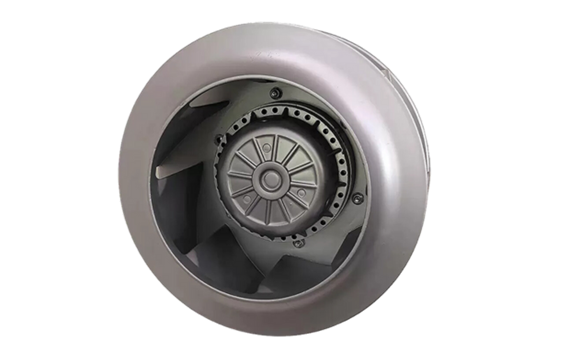
For many engineers, a catastrophic industrial fan failure comes as a complete shock. Textbooks and Computational Fluid Dynamics (CFD) simulations often present idealized operating conditions that simply do not exist in real-world industrial environments. Engineers trained strictly on simulation tools frequently miss the accumulated field wisdom required to predict these failures. The staggering truth is that 70% of premature fan failures stem from conditions that were never modelled during the design phase—such as process changes, installation errors, and deferred maintenance.
Understanding the root causes of these unexpected breakdowns requires looking beyond the screen and into the physical realities of the machinery.
1. The Structural Reality Gap
The stress fields governing different fan types are fundamentally different. Axial fans predominantly face bending fatigue at the blade roots, whereas centrifugal impellers battle centrifugal stress and extreme thermal gradients. What works for one geometry will fail catastrophically in the other, meaning you can never extrapolate design rules from an axial fans manufacturer to a centrifugal application.
Furthermore, the blade-to-hub junction in an axial fan experiences severe stress concentration, often 3 to 5 times higher than at the mid-span. Implementing 100% radiographic inspection at these blade roots can prevent 80% of early failures by identifying internal porosity that visual inspections miss.
2. Aerodynamics vs. Field Reality
CFD models predict steady-state performance brilliantly, but they cannot account for real-world transient events, such as a damper sticking open and forcing the fan to see 150% of its design flow. Upstream obstructions within three diameters of the inlet create swirl and velocity distortion, which can increase blade loading variation by 40%.
Additionally, operating to the left of the performance curve inflection point invites rotating stall and surge. Experienced centrifugal fan suppliers know that these instabilities generate violent pressure pulsations that can destroy bearings within weeks.
3. Resonance and Manufacturing Flaws
Vibration is a silent killer, with 85% of failures linked directly to resonance. This occurs when running speeds align with structural natural frequencies, amplifying vibration catastrophically. Compounding this issue is the fact that foundation compliance is often ignored to save costs; a foundation’s stiffness must be at least three times the equipment’s stiffness to prevent amplified vibrations.
Manufacturing tolerances also dictate lifespan. A mere 0.5 mm blade angle deviation across an impeller can create unbalanced aerodynamic loading and an 8% efficiency loss. During assembly, achieving proper bolt preload is actually more critical than the bolt grade itself, as under-torqued bolts allow for micro-movement and fretting. Moreover, square-bottomed shaft keyways create severe stress concentrations; using a profiled keyway reduces this concentration by 40%.
Partner With Kohmer For Real-World Reliability
To prevent surprising and costly downtime, you need an industrial fan manufacturer that designs for the harsh realities of the field, not just the pristine environment of a computer simulation. At Kohmer, we bridge the gap between theoretical design and heavy-duty field operation. We engineer our fans with strict manufacturing tolerances, rigorous weld inspections, and robust structural designs to ensure they withstand your most demanding processes.
Don’t leave your operational reliability up to idealized simulations. Contact Kohmer today to invest in industrial fans built for absolute field truth.